
The Rejection Letter Is Not the Verdict: Why April 2026 Is the Best Time to Redirect to Europe
- Apr 10
- 5 min read

Every spring, sometime between late March and the first days of April, a particular silence settles over certain American households. The portal has refreshed. The email has arrived. Four years of AP exams, meticulously curated extracurriculars, and tutors billing at premium rates have been weighed by a committee of strangers and found, in the careful language of institutional regret, not quite enough. For the families who planned everything around one domestic outcome, what follows is not a rhetorical question. It is an urgent one.
The Reframe: What European Universities Offer American Students That Rejection Letters Don't
The American admissions machine, as it operates in April 2026, functions less like a meritocracy and more like a lottery dressed in formal wear. Ivy League acceptance rates have fallen to 5.3%. At that threshold, nineteen out of twenty qualified applicants receive the same letter. The letter, whatever its carefully calibrated language, says considerably less about the student than the institutions responsible for it prefer to acknowledge.
What the 2026 cohort is learning to articulate, often faster than the adults around them, is that this is not a verdict. It is a redirection. Cognitive psychologists describe the mechanism as reappraisal: the deliberate restructuring of a narrative around new facts. The facts, in this instance, are substantial. More than a thousand English-taught undergraduate programs exist across Germany, Italy, Austria, and the Czech Republic. Many rank within the global top 500 under both the QS and Times Higher Education frameworks. These are not contingency schools. Several have been producing the world's professional class since before the United States existed as a country.
The European model also dismantles a structural myth the American campus has long sustained: that rigorous academic environments require expensive curated support infrastructure. European public universities treat students as independent adults from the first week. No meal plans, no residence advisors, no institutional hand-holding. The result, for those who make the transition, is an acceleration of the self-reliance that every competitive employer claims to be seeking.
At a 5.3% acceptance rate, nineteen out of twenty qualified applicants receive the same letter—and the letter says considerably less about the student than the institutions prefer to admit.
The Economics of the Decision
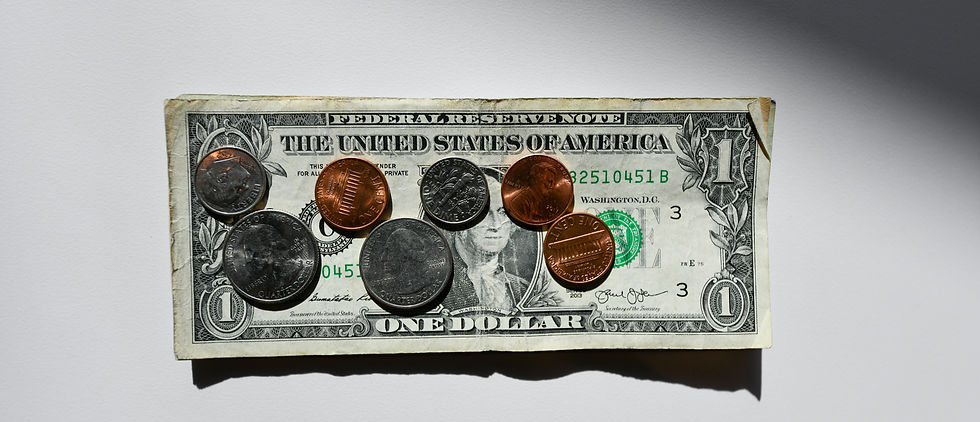
There is a number worth sitting with. A single year at an elite US private university now reaches $75,000 in tuition. The median cost of an English-taught program across continental Europe is approximately $9,000 per year. European bachelor's degrees, structured under the Bologna Process, run three years rather than four. The arithmetic is not subtle: a European undergraduate education can cost $200,000 less than its domestic equivalent and deliver a graduate to the labor market twelve months earlier.
That is not a marginal saving. It is a structural reorientation of risk.
At a moment when US student debt has surpassed $1.6 trillion nationally (a figure that functions less like a statistic and more like a generational warning), the European model offers something the domestic system has lost the capacity to provide: economic coherence. A student who graduates from Munich or Bologna carrying minimal debt enters the workforce with a degree of professional flexibility that a debt-laden American counterpart, however credentialed, simply does not possess.
The three-year structure also reflects a substantive pedagogical difference. European programs move directly into the major from year one, dispensing with the two-year general education buffer standard at US institutions. The result is a graduate with a depth of specialization that the 2026 labor market is actively rewarding. GPA screening by US employers has fallen to a record low of 42%. What has risen in its place is demand for verified expertise and cross-cultural capability.
A student who graduates from Munich or Bologna with minimal debt enters the workforce with a degree of professional flexibility that their debt-laden American counterpart simply does not have.
The Window Is Open. It Will Not Stay Open.
April is not only decision season for American families. For several of Europe's most respected institutions, it is also a live admissions window—and that coincidence is worth taking seriously.
The Technical University of Munich, ranked 22nd globally by QS and among Europe's foremost institutions for engineering, management, and computer science, accepts applications through May 31 via its direct portal. LMU Munich, ranked 58th, runs through July 15. The University of Bologna, ranked 138th globally and in continuous operation since 1088, has its third admissions intake open through June. Charles University in Prague, ranked 265th globally, closes April 30.
These are not rolling deadlines at peripheral institutions. They are active application windows at research universities that have operated at the highest level for centuries.
For Germany, the administrative requirements are specific: 16 academic units from grades 9 through 12, a minimum unweighted GPA of 3.0, and for direct subject-restricted admission, four to five AP exam scores of 3 or above. Students who fall short of those thresholds have access to the Studienkolleg—a one-year preparatory program that, by most accounts, produces a more focused and better-prepared student than arrived. Italy requires CIMEA credential verification and, for selective programs, either a minimum SAT score or a program-specific entrance exam. The paperwork is real. So is what follows it.
These are live application windows at research universities that have operated continuously for centuries—not backup plans dressed in different packaging.

What US Employers and Graduate Schools Actually Think
The objection that surfaces reliably in every serious conversation about European degrees is the recognition question. Will US graduate schools accept a three-year Bologna degree? Will US employers understand what it means?
On graduate school admission, the direction of travel in 2026 is unambiguous. Leading credential evaluators, including World Education Services and the Law School Admission Council, have shifted toward what specialists call the benchmarking model: assessing learning outcomes rather than counting calendar years. Because European secondary education typically incorporates material equivalent to US general education requirements, the three-year Bologna degree is increasingly treated as sufficient preparation for graduate study. This is not a workaround. It is a recognition that the European architecture produces comparable graduates through a different design.
On employer perception, the data is more striking still. The 2026 Global Employability University Ranking and Survey recorded something that had not occurred in the survey's history: 'Internationality' surpassed 'Academic Excellence' as a primary driver of graduate employability. Among 3,147 employers surveyed, 86% cited international experience as a meaningful indicator of professional readiness. A student who spent three years managing their own housing, navigating a foreign institution, and building competencies across cultural contexts arrives at an interview with a story. It tends to be the better story in the room.
One honest caveat: students intending to pursue US medical school face a structural obstacle. Most MD programs require at least 90 semester hours from a US or Canadian accredited institution—a threshold a European bachelor's degree alone does not satisfy. Students with medical ambitions require careful planning and almost certainly a domestic supplement. Law school presents fewer barriers, provided LSAT scores are current and transcripts are routed through LSAC.
In 2026, 'Internationality' surpassed 'Academic Excellence' as a primary driver of graduate employability—for the first time in the survey's history.
The Equedu Verdict
Here is what the rejection letter actually says: the domestic system is oversubscribed. A 5.3% acceptance rate is not a talent filter—it is a capacity problem. Europe has always had the infrastructure, the academic credibility, and the professional outcomes to absorb the overflow. It simply required this particular economic moment for American families to notice. The students who redirect now, with live applications at Munich, Bologna, and Vienna still on the table, are not settling. They are closing an information gap that most of their peers have not yet opened. That advantage has an expiry date.
Equedu's admissions team works with students from North America, Asia, the Gulf, Latin America, and beyond to identify which European programs remain open, which match a student's academic profile, and how to move decisively without costly administrative errors. Schedule a free consultation and find out exactly where the door is still open.


Comments